Memaparkan catatan dengan label Teknologi. Papar semua catatan

Selasa, 18 Ogos 2015

How Google’s Networking Infrastructure Has Evolved Over The Last 10 Years

 
Google today announced that it wants to fix your home Wi-Fi, but internally, it has long been working on far more complex networking issues. To connect the hundreds of thousands of machines that make up a Google data center, you can’t just use a few basic routers and switches. So to manage all the data flowing between its servers, Google has been building its own hardware and software, and today, it’s pulling back the curtain and giving us a look behind the evolution of its networking infrastructure.
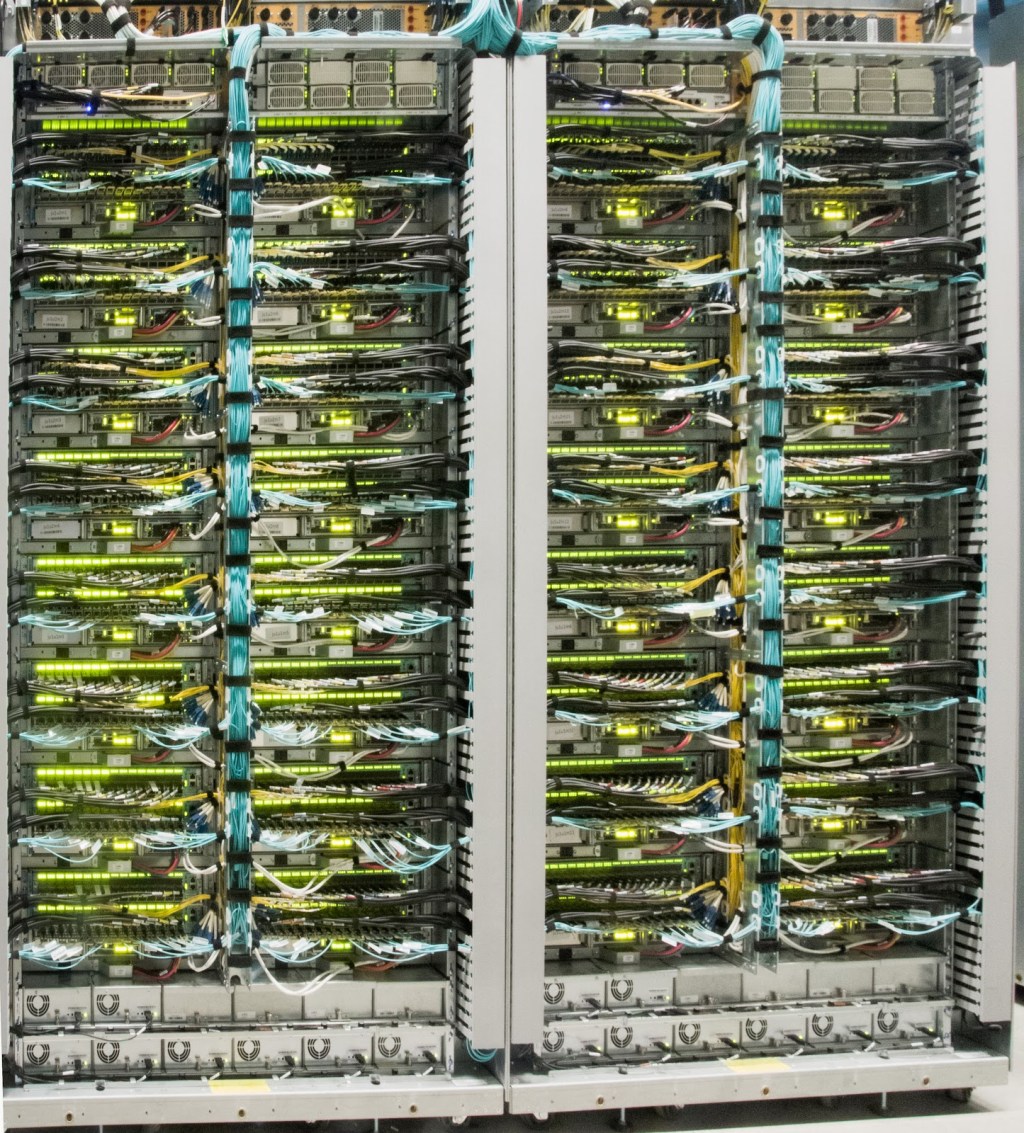
Google’s current setup, the so-called Jupiter network, has 100x more capacity than its first-gen network and can deliver a stunning 1 petabit/sec of total bisection bandwidth. The company says this kind of speed allows 100,000 servers to read all of the scanned data in the Library of Congress in less than a tenth of a second.
“Such network performance has been tremendously empowering for Google services,” Google Fellow Amin Vahdat writes today. “Engineers were liberated from optimizing their code for various levels of bandwidth hierarchy. For example, initially there were painful tradeoffs with careful data locality and placement of servers connected to the same top of rack switch versus correlated failures caused by a single switch failure.”
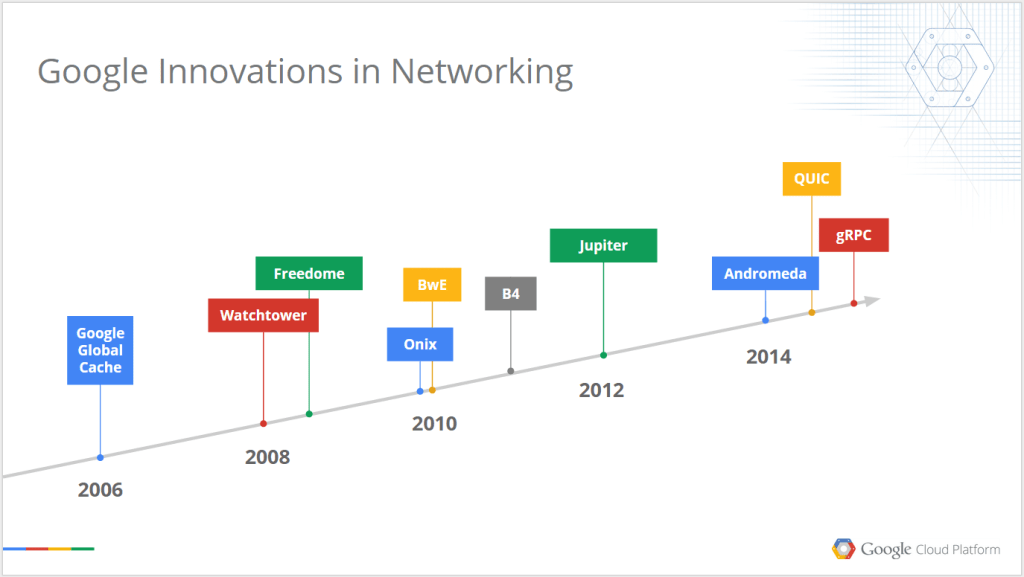
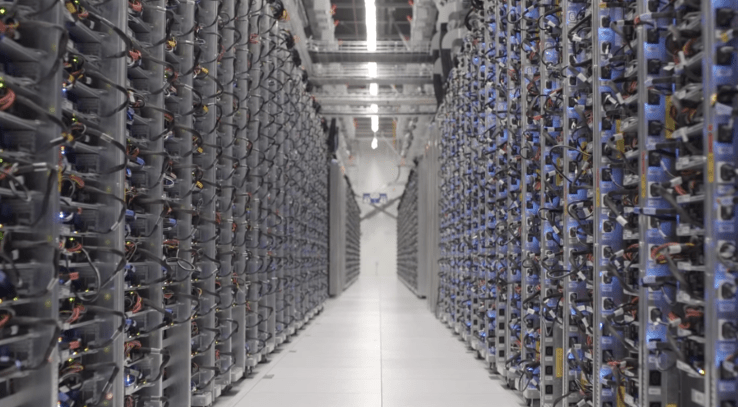
image02
Ten years ago, however, Google didn’t have anywhere near this capacity. This was before it had acquired YouTube and shortly after it launched products like Gmail, Google Earth and Google Maps, so the company’s needs were likely changing very quickly.
Here is what those early 2005 machines looked like:
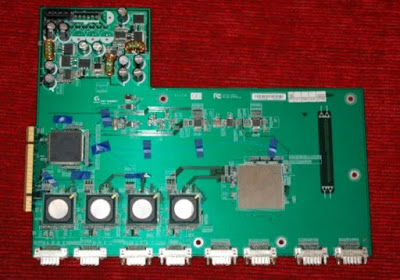
As Google writes in a paper today, the company basically still deployed standard server clusters in 2004, and these 2005 machines are the first example of the networking it deployed in its Firehose 1.0 data center architecture. The goal of the 2005 machines was to achieve 1 Gbps of bisection bandwidth between 10,000 servers. To get there, Google tried to integrate the switching fabric right onto its homebuilt servers, but it turns out that “the uptime of servers was less than ideal.”
With Firehose 1.1, Google then deployed its first custom data-center cluster fabric. “We had learned from FH1.0 to not use regular servers to house switch chips,” the company’s engineers write. Instead, Google built custom enclosures and moved to a so-called Clos architecture for its data center networks.
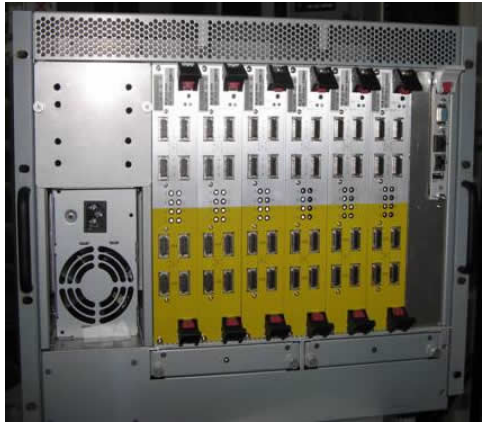
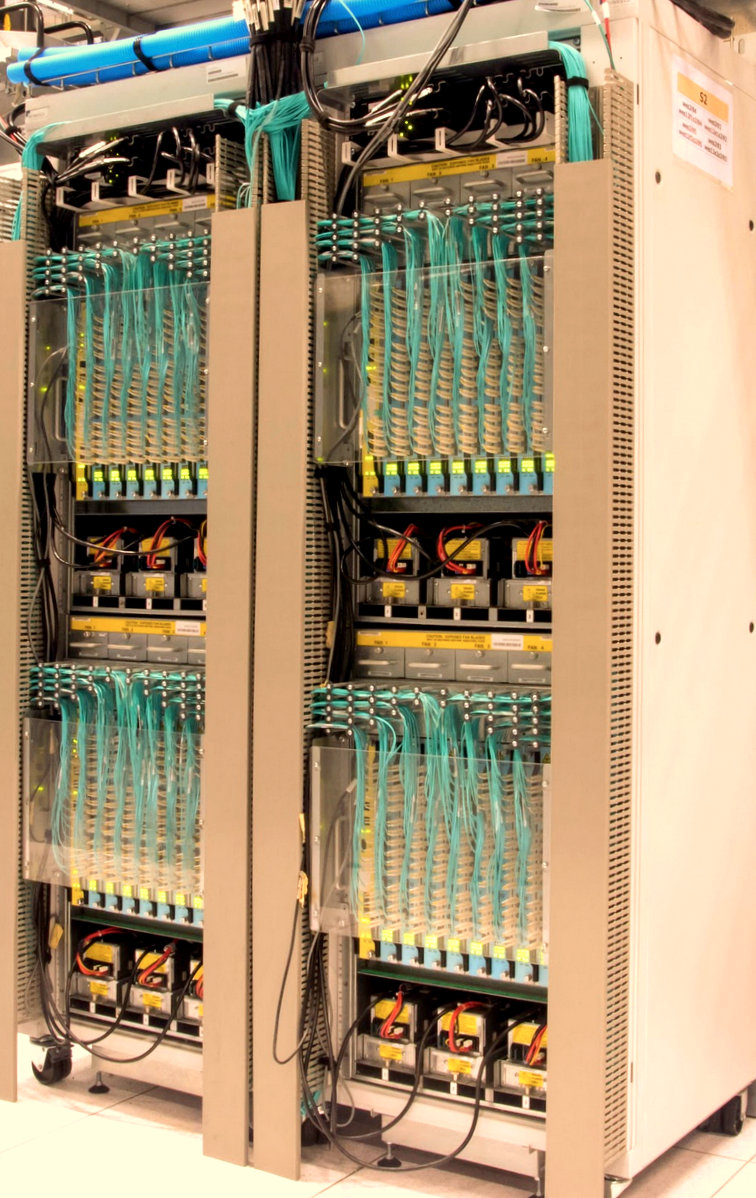
By 2008, Firehose 1.1 had evolved into WatchTower, which moved to using 10G fiber instead of traditional networking cables. Google rolled this version out to all of its data centers around the globe.
Here is what those racks looked like:
WT2
A year later, WatchTower then morphed into Saturn. While the WatchTower fabric could scale to 87 Tbps, Saturn scaled up to 207 Tbps on denser racks.

Saturn clearly served Google well, because the company stuck with it for three years before its needs outstripped Saturn’s capabilities.
“As bandwidth requirements per server continued to grow, so did the need for uniform bandwidth across all clusters in the data center. With the advent of dense 40G capable merchant silicon, we could consider expanding our Clos fabric across the entire data center subsuming the inter-cluster networking layer,” Google’s engineers write.
It’s that kind of architecture that now allows Google to treat a single data center as one giant computer, with software handling the distribution of the compute and storage resources available on all of the different servers on the network.
The Jupiter hardware sure looks different from Google’s earliest attempts at building its custom networking gear, but in many ways, it’s also the fact that the company quickly adopted Software Defined Networking that allowed it to quickly innovate.
Google today released four papers that details various aspects of its networking setup. Because Google tends to hit the limits of traditional hardware and software architectures long before others, similar papers have often spawned a new round of innovation outside of the company, too.
It’s unlikely that all that many startups need to build their own data centers, but other data center operators will surely study these papers in detail and maybe implement similar solutions over time (which in turn will benefit their users, too, of course).
Jupiter-superblock3

Isnin, 15 Jun 2015

Kenapa Huruf Pada Papan Kekunci (Keyboard) Tidak Teratur?

Papan kekunci atau “keyboard” adalah tidak asing lagi sejak komputer telah diperkenalkan. Kalau dulu mungkin hanya di pejabat-pejabat, tetapi kini samada di universiti, di sekolah dan juga di rumah, papan kekunci amat diperlukan. Malah, di setiap telefon juga perlukan papan kekunci.

Tetapi, kenapa ya? susunan huruf-huruf pada papan kekunci disusun tidak teratur sedemikian rupa?

Papan kekunci muncul pertama kalinya masih dalam bentuk mesin taip pada tahun 1868. Ia diperkenalkan oleh Christopher Latham Sholes. Mesin taip ini masih diperingkat asas, masih menggunakan tangkai-tangkai besi untuk mencetak huruf pada kertas putih.


Ketika ia mula dicipta, susunannya masih mengikut turutan abjad ABCD. Ia memudahkan pengguna mencari huruf dan mengeja. Kerana terlalu mudah, para pengguna sangat cekap menggunakannya.

Tetapi, itu bukanlah sesuatu yang bagus kerana tangkai-tangkai besi untuk mencetak huruf seringkali tersangkut antara satu dan lain kerana bergerakan yang sangat pantas ketika menaip.

Gara-gara masalah ini, akhirnya pada tahun 1873 seorang ilmuwan bernama E. Remington mengilhamkan susunan huruf seperti yang terdapat pada papan kekunci yang kita gunakan sekarang. Matlamat utamanya adalah untuk mencegah kerosakan pada mesin taip.

Pada ketika itu, inilah cara yang difikirkan sesuai dan dipersetujui oleh para ilmuwan untuk menggunakan kombinasi huruf QWERTY pada mesin taip. E.Remingkon menganggap kombinasi ini adalah yang paling sukar tetapi telah berjaya mengurangkan kadar kerosakan mesin taip pada ketika itu.

Kaedah susunan ini terus dikekalkan sehingga wujudnya komputer kerana para pengguna telah biasa dengan kombinasi ini. Walaupun masalah tangkai-tangkai besi sudah tidak mungkin berlaku lagi.

Selasa, 2 Jun 2015

How to Install and Run Windows 10 On a Virtual Machine

 
Windows 10 is one of the most talked about subjects since it was first announced by Microsoft and probably the most highly-anticipated operating system ever. A lot of people would like to try it out for themselves, but as the OS is still in beta, they don't want to trade their fully functional operating system for one that is unstable and still has bugs and other problems. The best way to try Windows 10 while also keeping your current operating system is to create a virtual machine and run it from there. In case this is a solution you are willing to try out, here's how to do it.
Let's start from the beginning and talk about everything you'll need in order to do this. The first ingredient is time as, depending on your computer's performance and Internet connection speed, it may take over an hour. Another important aspect is disk space, as you will need to download and install the virtual machine creating application (virtualization software), the Windows 10 installation kit (approximately 4GB) and somewhere around 50GB of free hard-disk space where you install and run the operating system. If you have all that, head over to the Microsoft's website, sign up for the Windows Insider Program and download the ISO image which contains the installation kit.
Install NowInstall Now
The next step is to download and install an application to help you setup a virtual machine. If you are unsure how to do that or what tools to use, I've written a guide on the matter which you can find by accessing this link. There, you will find everything you need to know so once you've set up your VM, proceed to the next step. Just remember that in order to be able to operate decently, Windows 10 will need you to allot it at least 2GB of RAM and a minimum of 25 GB of space on your hard-disk. Furthermore, you can make additional tweaks to enable or disable shared clipboards, drag and drop operations and other interactions between the two operating systems you (will) have installed.
Now it's time to install the Windows 10 Technical Preview on your virtual machine. Run the virtual machine application and choose the ISO you downloaded as the operating system to install. After a bit of waiting around (depending on how good your system is), you will see a purple background with a menu in the middle where you should click the Next and Install Now buttons. Microsoft will then display its end-user license agreement which you have to agree with (by checking the corresponding box) and once again press the Next button. In the following screen, you will be able to choose between upgrading the current Windows version and performing a custom installation. Select the second option, click Next and be prepared to once again wait around for a while. (During this time the virtual machine will reboot itself several times).
Language SetupLanguage Setup
Now follow the normal Windows installation procedure: select your Language, keyboard layout and time and currency display and then sign in with your Microsoft account (if you don't already have one, click on the Sign Up button and select the Connect My Account Later option. After that, choose your Windows 10 username and input the desired password (if you don't want to use a password you can skip it by leaving the field empty and the installation process will go on even if you receive an error message). The operating system will begin installing the final components and making the last adjustments and once that's done, you can start testing out your new operating system.
Working with Windows 10Working with Windows 10
Optionally, my advice to you is to check for available updates right from the get go. To do this click, on the Start Menu (the Windows icon in the lower-left corner), go to Settings and choose the Update & Security option which will automatically check for updates. Additionally, Windows 10 uses something Microsoft calls Fast Circle and Slow Circle to let the users decide if they want to receive the latest updates as soon as they're available or wait for others to test them out first and make sure they're fully functional. Since this is your secondary operating system and functionality isn't your main concern, I suggest choosing the fast circle in order to see all the new stuff for yourself as soon as possible.

Khamis, 21 Mei 2015

6 Smartphone Jimat Bateri

Teknologi smartphone semakin hari semakin berkembang. Boleh dikatakan setiap minggu ada model terkini smartphone dari pengeluar alatan telekomunikasi di seluruh dunia. Dari spesifikasi pemproses, kamera dan rekabentuk yang semakin cantik dan menawan. Tetapi kebanyakan pengeluar smartphone ini seperti tidak mementingkan kapasiti bateri yang sesuai untuk keupayaan tempoh hayat penggunaan smartphone yang mereka keluarkan itu adakah ianya menepati ciri-ciri yang mereka tampilkan untuk masa penggunaan yang lama dan optimum atau tidak. Ini kerana kapasiti bateri smartphone hari ini kebanyakkannya tidak boleh bertahan lama bagi penggunaan yang kerap.
Kesannya sering kita lihat kebanyakkan pengguna smartphone ini membawa bersama Powerbank ke mana-mana mereka pergi. Sepertinya mereka membawa lebih dari satu device untuk memastikan mereka boleh terus menggunakan smartphone mereka. Pasaran Powerbank terus trending pada masa ini kerana rata-rata kebanyakkan smartphone terkini hanya mempunyai kapasiti bateri antara 1500mAh ke 3000mAh tidak dapat menampung hayat penggunaan yang lebih lama.

6 Smartphone Bateri Tahan Lama

Bagi mereka yang tidak suka membawa ‘bebanan’ semata-mata untuk memanjangkan jangka hayat smartphone mereka dalam satu hari, saya mencadangkan beberapa smartphone yang mempunyai bateri berkapasiti 4000mAh yang mampu menampung penggunaan berat dan dapat bertahan lebih dari 1 hari.

1. Lenovo P70, Bateri 4000mAh
long lasting smartphone, 4000mAh battery capacity 

2. Lenovo K80, bateri 4000mAh
long last smartphone lenovo k80 

3. Huawei Ascend Mate7, Bateri 4100mAh
Huawei Ascend Mate7 4100maH battery capacity

4. Huawei P8max, bateri 4360mAh
Huawei P8max malaysia price

5. Lenovo Vibe Z2 Pro, bateri 4000mAh
Lenovo Vibe Z2 Pro Malaysia price

6. Lenovo S860, bateri 4000mAh
lenovo s860 malaysia

Kebiasaannya, kebanyakan smartphone yang mempunyai bateri berkapasiti 4000mAh keatas ini mampu bertahan selama 2 hari dengan penggunaan kerap. Anda boleh ucapkan selamat tinggal kepada PowerBank yang berat buat masa ini. :)

Selasa, 24 Mac 2015

Netscape: the web browser that came back to haunt Microsoft

Bill Gates at the launch of Internet Explorer 4.0 in 1997. 

So Microsoft has decided to “retire” Internet Explorer, its web browser. So what? For most internet users the news probably ranked somewhere near the latest information about bond yields on Romanian debt. But for old timers like this columnist, it draws a line under an interesting chapter in the modern history of the computer industry.
So let’s spool back a bit – to 1993. By then, the internet was roughly 10 years old, but for its first decade had been largely unknown to anyone other than geeks and computer science researchers. Two years earlier, Tim Berners-Lee had created and released the world wide web onto the internet, but initially no one noticed. Then in the spring of 1993, Marc Andreessen and Eric Bina released Mosaic – the first graphical browser – and suddenly the “real world” realised what the internet was for, and clamoured to get aboard.
But here’s the strange thing: Microsoft – by then the overwhelmingly dominant force in the computing world – failed to notice the internet. One of Bill Gates’s biographers, James Wallace, claimed that Microsoft didn’t even have an internet server until early in 1993, and that the only reason the company set one up was because Steve Ballmer, Gates’s second-in-command, had discovered on a sales trip that most of his big corporate customers were complaining that Windows didn’t have a “TCP/IP stack” – ie, a way of connecting to the internet. Ballmer had never heard of TCP/IP. “I don’t know what it is,” he shouted at subordinates on his return to Seattle. “I don’t want to know what it is. But my customers are screaming about it. Make the pain go away.”
But even when Microsoft engineers built a TCP/IP stack into Windows, the pain continued. Andreessen and his colleagues left university to found Netscape, wrote a new browser from scratch and released it as Netscape Navigator. This spread like wildfire and led Netscape’s founders to speculate (hubristically) that the browser would eventually become the only piece of software that computer users really needed – thereby relegating the operating system to a mere life-support system for the browser.
Advertisement
Now that got Microsoft’s attention. It was an operating-system company, after all. On May 26, 1995 Gates wrote an internal memo (entitled “The Internet Tidal Wave”) which ordered his subordinates to throw all the company’s resources into launching a single-minded attack on the web browser market. Given that Netscape had a 90% share of that market, Gates was effectively declaring war on Netscape. Microsoft hastily built its own browser, named it Internet Explorer (IE), and set out to destroy the upstart by incorporating Explorer into the Windows operating system, so that it was the default browser for every PC sold.
The strategy worked: Microsoft succeeded in exterminating Netscape, but in the process also nearly destroyed itself, because the campaign triggered an antitrust (unfair competition) suit which looked like breaking up the company, only to founder at the last moment. So Microsoft lived to tell the tale, and Internet Explorer became the world’s browser. By 2000, IE had a 95% market share; it was the de facto industry standard, which meant that if you wanted to make a living from software development you had to make sure that your stuff worked in IE. The Explorer franchise was a monopoly on steroids.
But it turned out to be a double-edged sword. Companies and large organisations built their IT infrastructure around Internet Explorer. The NHS, for example, has hundreds of thousands of PCs, and for years, if you wanted to sell software products to it, then they had to be able to run not just on IE but on a specific version (6) of the program. For all I know, that may still be the case.
So the very success of Microsoft in dominating the browser market in effect locked some of its biggest customers into an increasingly dysfunctional and insecure time warp. But Microsoft’s monopolistic grip on the PC operating system and office software market also rendered it blind to what was happening in the computing industry generally. Just as it missed the internet when it first appeared, Microsoft also missed the switch to cloud computing and mobile devices.
And because Internet Explorer was so dominant, Microsoft had little incentive to update and improve it. So, in the end, other – more innovative – browsers like Opera, Safari, Firefox and eventually Google Chrome appeared. In comparison with these newcomers, IE looked increasingly tired and impoverished, the software equivalent of a former heavyweight champion grown fat and arthritic. And the intriguing thing is that the contender that triggered its decline was Firefox, the product of the Mozilla Foundation, an organisation created from the ruins of... Netscape. Who said there’s no justice?

Rabu, 18 Mac 2015

Ketahui Apakah Data Yang Diakses Oleh Aplikasi Android Pada Telefon Pintar Anda

Setiap aplikasi yang terpasang pada telefon anda, biasanya akan mengakses beberapa tetapan lain atau data pada telefon pintar dalam menawarkan beberapa perkara – seperti akses ke internet untuk memaparkan kemaskini pada aplikasi Facebook, akses kepada kamera untuk merakamkan gambar pada aplikasi Instagram – dan pelbagai penggunaan dan akses yang lain.
Google sendiri sering memaparkan akses yang diminta oleh sesuatu aplikasi ketika anda ingin memasangnya melalui Google Play Store – tetapi daripada pengamatan kami, sejumlah besar pengguna tidak mengambil peduli mengenainya.
Ketika anda memilih untuk memasang aplikasi – sama ada melalui web Play Store ataupun pada aplikasi di Android anda, ia akan memaparkan sebuah pop-up dengan sejumlah akses yang diperlukan untuk aplikasi tersebut berfungsi.
Play Store Install
Mungkin untuk aplikasi popular, ia sering dipantau oleh komuniti dan pelbagai maklumbalas dikongsikan melalui laman sosial mahupun ruangan komen. Namun, dengan jutaan aplikasi yang terdapat di PlayStore, ada baiknya anda juga turut melakukan semakan untuk sesuatu aplikasi berkenaan.
Sebagai contoh, kadang-kala anda mungkin akan dapat melihat aplikasi berbentuk permainan yang meminta akses ke buku alamat, dan beberapa aplikasi yang meminta akses untuk pelbagai perkara yang tidak diperlukan untuk ia berfungsi.
Kadang-kala masalah ini timbul kerana masalah kod ketika pengaturcaraan – dan anda boleh mengambil tidak untuk memasangnya, dan menghantar emel kepada pembangun bagi memberitahu mengenai masalah tersebut.
Pada masa yang sama, anda juga turut boleh melakukan semakan berkala kepada aplikasi yang sedia terpasang pada peranti mudah-alih anda. Salah satu aplikasi yang membantu dalam perkara ini adalah aplikasi Permission Friendly Apps.
Permission Friendly Apps
Menggunakan aplikasi berkenaan, anda akan dipaparkan dengan akses yang dipohon oleh sesuatu aplikasi yang terdapat pada peranti mudah-alih anda. Anda kemudiannya boleh memilih untuk membuang aplikasi berkenaan, ataupun kekal menggunakannya.

Kemas Kini Windows 10 Percuma Walaupun Anda Pengguna Versi Cetak Rompak

 
Berita baik kepada pembajak sistem operasi Windows seluruh dunia. Microsoft tidak akan menghukum anda sekiranya anda pengguna sistem operasi mereka secara cetak rompak. Pengguna Windows 8.1 dan 7 akan dapat melakukan kemas kini secara percuma apabila Windows 10 dijangka memasuki pasaran musim panas akan datang.
Apakah logik di sebalik tindakan Microsoft ini? Pertama sekali ia mengurangkan fragmentasi di kalangan pengguna. Strategi ini sama seperti strategi sistem operasi peranti pintar yang memberikan kemas kini terbaru tanpa sebarang bayaran. Dengan penggunaan satu sistem operasi secara menyeluruh ianya juga menjimatkan kerja yang perlu dilakukan oleh Microsoft untuk memperbaiki kerentanan pada sistem operasi pelbagai versi.  Ianya juga berharap dapat memastikan pengguna di sektor korporat untuk dapat mengemaskini kesemua komputer Windows mereka kepada versi lebih selamat tanpa perlu memikirkan kos.

Ahad, 15 Mac 2015

Android Headliner: A Virtual Reality Device?

AH Samsung Gear VR-1 

Over the last year there have been a number of new platform and ‘fields of android’ coming through. Android TV, Android Auto and Android Wear to name just a few. However, one of the more interesting platforms of late is virtual reality. A year ago, this was largely a thing of science fiction and reserved for movies and TV alike. Then came along Samsung with their Gear VR and everything changed. Then LG followed suit, making their intention clear to enter the field. Then came HTC at MWC with their rather strange looking HTC Vive unit, which seems to have a clear focus on gaming. Not forgetting, Google also released their on-the-cheap Google Cardboard option last year. Even this week, there were reports that Google are rumored to be working on some sort of unifying ‘android for virtual reality’ platform. So, it does seem that Virtual Reality is here to stay. But is it? It is clear that manufacturers see a market and they are now all scrambling to offer their various options. In fact, one could argue HTC shifted their focus this year from offering the revamped HTC One M9 that everyone expected, to virtual reality.

Let’s face it, if they had not been announcing the HTC Vive, then they would certainly have needed to put more effort into the One M9. So manufacturers obviously see a market. But does the market actually exist? Who is going to buy this sort of tech? Is it not overkill? There are problems with overheating, there are health issues associated with VR units, lots of people are not supposed to use them. Not to mention, it seems unlikely that most ‘average’ consumers are going to be picking up a VR unit any time soon. Or is this wrong? Are manufacturers seeing a brand new industry which will allow them to cross over into new fields and pick up new customers? Will Samsung further delve into virtual reality based movies and videos and secure a bunch of new video based customers while HTC does the same with the gamers out there? It all currently seems too disjointed and lacking a clear industry direction. Maybe the various manufacturers are just trying to appeal to the tech-savvy among us? Maybe VR is merely a show of force between the manufacturers, a race to show who can build the best VR unit that no one wants or will use.

Remember 3D TV’s? They were successful weren’t they. People ran to the shops to pick them up. Is VR not just the next evolution of 3D TV’s? Will you be walking past a shop in few years, see a Gear VR or HTC Vive in a bargain bucket and think “damn, I forgot about that!” Who knows! The truth is, in this ever-changing and quick-evolving world of tech, there are no guarantees anymore. VR units might seem like like the next level, but it just as easily and just as quickly could become dated. To throw my two cents in, I doubt I’ll be buying one. The question is though, will you?

Khamis, 12 Mac 2015

Dot ML platform bantu PKS tempatan

JOOST ZUURBIER (kanan) bergambar bersama Hawa Diakite (tengah)  
PETALING JAYA 16 Feb. - Pendaftar laman web yang berakhir dengan .ml, Dot ML bercadang mengkomersialkan penggunaan .ml dalam kalangan perusahaan kecil sederhana (PKS) tmpatan bermula tahun ini bagi membantu menaik taraf perancangan dan operasi perniagaan dengan lebih sistematik.
Ketua Pegawai Operasi Dot ML, Jeremie Godreche berkata, penggunaan pendaftar berkenaan merupakan inisiatif yang dibangunkan bagi memudahkan sektor PKS untuk menjadikan Internet sebagai salah satu cabang komunikasi dan pengendalian operasi dengan percuma atau pendaftar premium dengan harga yang murah.

Katanya, sebilangan besar PKS masih lagi tidak mempunyai pendaftar laman web yang dapat memberi imej yang baik kepada perniagaan mereka, sekali gus menjadikan segmen pemasaran perniagaan tidak dapat mencapai objektif bagi perolehan dan syarikat.

“Buat masa ini, kebanyakan perniagaan masih lagi menggunakan akaun emel seperti Hotmail atau Yahoo! sebagai medium komunikasi korporat ataupun semasa menjalankan urusan perniagaan.

“Kita menjangkakan usahawan daripada sektor PKS akan menjadikan pendaftar laman web ini sebagai langkah utama dalam operasi pemasaran mereka kerana lebih mudah dan senang untuk didaftarkan dan digunakan,” katanya dalam sidang akhbar pelancaran .ml di sini hari ini.
Yang turut hadir, Ketua Pegawai Eksekutif Dot ML, Joost Zuurbier dan Pengarah Pendaftaran Dot ML Bahagian Mali, Hawa Diakite.

Jelas Godreche, pihaknya kini turut menjalankan pelbagai aktiviti promosi dan kesedaran awam terhadap kepentingan dan keupayaan menggunakan .ml.

“Buat masa ini, kita mempunyai sebanyak 350,000 pendaftar laman web yang berakhir dengan .ml daripada 30 juta pendaftar di seluruh dunia dan bagi Malaysia kami menyasarkan sebanyak dua hingga tiga juta pendaftar baharu kerana kepadatan jumlah pengguna Internet yang tinggi di negara ini,” katanya.
Tambahnya, Malaysia merupakan negara ASEAN pertama yang menggunakan pendaftar .ml dan dijangkakan akan memperkenalkannya di Manila, Filipina pada tahun hadapan.

Selasa, 3 Mac 2015

Modul Project Ara Dipertontonkan Pada MWC 2015

Mobile World Congress menyaksikan sejumlah produk baru dilancarkan dan dipertontonkan. Tidak ketinggalan adalah Yezz Mobile yang mana merupakan salah satu syarikat yang membangunkan modul untuk Project Ara. Mereka telah pun memperlihatkan beberapa gambaran modul dan bagaimana ia akan kelihatan kelak.
Modul Projek Ara
Modul Projek Ara
Bagi yang tidak mengenali akan Project Ara, ia merupakan projek untuk telefon modular yang sedang dalam proses pembangunan dibawah pasukan Google ATAP. Mereka telah memperlihatkan ia beberapa kali sebelum ini, membolehkan pengguna mengubah pelbagai modul pada telefon pintar dan menaik-tarafnya – sekaligus mengurangkan pembaziran bahan elektronik. Sebagai contoh, sekiranya anda inginkan peranti dengan kamera belakang yang lebih baik, anda tidak perlu mengubah keseluruhan peranti, tetapi sekadar mengubah modulnya sahaja, dan proses mengubahnya juga amat mudah.
Ia tidak lagi diketahui bilakah telefon pintar dibawah Project Ara ini akan dipasarkan secara meluas. Buat masa ini, ia masih lagi pada peringkat pembangunan, dan ikut sasaran Google, peranti menggunakannya mungkin akan hadir pada tahun ini.
Modul Projek Ara
Modul Projek Ara

Isnin, 22 Disember 2014

Maxis Tidak Ingin Caj PPU – Ingin membolehkan Lebih Ramai Menggunakan Pelan Data

Pejabat Maxis 

Malam semalam, kami telah berpeluang meluangkan sedikit masa dengan CEO Maxis, dimana beliau telah berkongsi beberapa perkara mengenai Maxis dan pembaharuan yang telah dilakukan oleh mereka akhir-akhir ini. Menjadi fokus utama dalam perkongsian CEO Maxis, Morten Lundal adalah perkongsian mengenai penggunaan data yang semakin meningkat dari hari ke hari.

Morten mengatakan salah satu sebabnya adalah kerana lebih ramai mengakses kandungan melalui telefon pintar mereka, termasuk menonton video yang menggunakan data yang agak tinggi. Menurut Morten, pada rangkaian mereka, pengguna prabayar menggunakan secara purata 800MB sebulan, sementara pengguna pascabayar pula menggunakan secara purata sebanyak 1.4Gb sebulan.

Secara kasarnya, pengguna umum di rangkaian Maxis menggunakan dibawah 2GB untuk sebulan. Penggunaan data mudah-alih lebih digunakan ketika mereka berada di kawasan tanpa WiFi, sebaliknya ketika berada di rumah dan pejabat, mereka mungkin menghubungkan ke rangkaian WiFi, dan mengurangkan penggunaan data mereka.
”Lebih 50% Pengguna Hotlink Menggunakan Telefon Pintar, Purata 800MB sebulan”
Akhir-akhir ini, pihak Maxis telah mula memperluaskan sokongan rangkaian 4G LTE mereka lebih luas, berbanding hanya sekitar Lembah Klang sahaja sebelum ini. Kami sendiri merasai perubahan ini, apabila kebanyakkan kawasan yang kami kunjungi akhir-akhir ini dilihat telah disokong dengan rangkaian 4G LTE, dan seperti biasa, pengguna memerlukan peranti dengan sokongan rangkaian 4G LTE untuk dapat menikmatinya.

Disamping itu, pihak Maxis turut berkongsi mengatakan melalui penawaran #Hotlink yang diperkenalkan pada tahun lepas, ia telah menarik lebih ramai mula menggunakan data pada peranti mereka. #Hotlink merupakan salah satu pelan yang disediakan untuk pengguna prabayar, dimana mereka boleh menggunakan data secara percuma pada kelajuan 64kbps.

Maxis turut mengatakan penawaran #Hotlink telah memberikan kesan negatif kepada penggunaan SMS pada rangkaian mereka. Sejak ia diperkenalkan, penghantaran SMS telah berkurangan pada rangkaian prabayar, sebaliknya pengguna dilihat lebih menggunakan perkhidmatan permesejan seperti WhatsApp untuk berinteraksi memandangkan data ditawarkan secara percuma.

“Maxis ingin menawarkan langganan data tanpa kerisauan.” Morten turut mengatakan yang mana mereka tidak lagi ingin memfokuskan kepada persaingan, sebaliknya ingin memfokuskan untuk membolehkan lebih ramai menggunakan rangkaian data, disamping menawarkan khidmat pelanggan yang baik kepada pelanggan mereka.

Pada masa yang sama, Morten turut berkongsi mengatakan mereka telah mula membuat perubahan pada cara Maxis beroperasi sebagai organisasi. Mereka kini telah lebih kurang menggunakan kertas dalam urusan pejabat mereka, dan ingin menjadi antara syarikat bebas kertas tidak lama lagi. Perkara ini dijangka akan diubah secara berkadar dari organisasi kepada penawaran mereka kepada pelanggan.
Pejabat Maxis KLCC
Muat-Turun Aplikasi Hotlink Red dan terima kredit RM5Pejabat mereka juga telah mula diubah-suai sedikit demi sedikit, dimana semua pekerja termasuk CEO dan mereka berjawatan tinggi bekerja dalam keadaan yang terbuka, dan tidak lagi menggunakan bilik-bilik khas seperti organisasi tradisional. Tempat duduk Morten sendiri adalah selari dengan semua pekerja lain, membolehkan mereka berinteraksi dan menyampaikan sesuatu pesanan dengan lebih efektif.

Menyentuh secara ringkas untuk tahun 2015, mereka dilihat akan memfokuskan lebih kepada penawaran data yang baik, namun tiada sebarang perancangan untuk penukaran harga penawaran dilihat buat masa ini. Maxis turut mengatakan mereka akan memperkenalkan kemaskini kepada aplikasi MyMaxis mereka, disamping menambah lebih banyak penawaran melalui aplikasi Hotlink. Bagi anda yang menggunakan rangkaian Hotlink, mungkin boleh memuat-turun aplikasi ini secara percuma untuk menguruskan akaun anda, dan menerima kredit percuma sebanyak RM5 kerana memuat-turunnya.

Rabu, 26 November 2014

Windows 10: What CIOs think of it so far

Windows 10, Microsoft's next operating system, isn't expected until the middle of next year at least, and the company is still slowly revealing the details, which include support for a wider range of devices and increased security.
But considering the cool reception Windows 8 has had from business so far, Microsoft has to make a compelling case to firms as to why they should upgrade to Windows 10 when it arrives.
And so far, tech chiefs on seem to have a positive view of Windows 10, at least at this early stage in its development. When asked "Do you think Microsoft heading in the right direction with Windows 10?" the TechRepublic CIO Jury voted yes by a margin of 11 to one.
"From our preliminary review, the Windows 10 Technical Preview looks to be on the right track. Our institution has bypassed Windows 8.x and looks forward to testing and implementation of Windows 10 as soon as we confirm compatibility with our systems. It's great to be excited about a new version of Windows again," said Chuck Elliott, CTO at Concord University.
And Michael Spears, CIO at NCCI Holdings, was similarly optimistic: "It's still very early, but it seems they have renewed their focus on business, which deteriorated over the last few years. It's very welcome from my perspective."
Delano Gordon, CIO at Roofing Supply Group, said getting business onboard early will be key for Microsoft. "I believe they dropped the ball with Windows 8 thinking both business and consumers would love the new user interface.
"Business and its user base will always be slow to change without proper mechanisms in place to ease any transition. A strong and compelling argument must exist before enterprises, having just transitioned to Windows 7, decide to go to Windows 10 right out of the gate. The list of features and improvements sound like a step in the right direction however."
But just because these tech chiefs like the look of Windows 10 it doesn't necessarily mean they're in a rush to migrate to it: instead, many seem quite comfortable with Microsoft's last-but-one operating system, Windows 7 (in any case businesses usually wait a year or so after a new operating system is released before moving over). In particular, many firms have been reluctant to move to the Windows 8 because they worry the new look and feel it offers could be confusing to staff.
Richard Frisch, CTO at Global Strategy Group, said Microsoft is heading in the correct direction for enterprise users. Windows 8 is too different to Windows 7 to be easily supported, he said, but while Windows 10 has some of Windows 8/8.1 changes embedded - like both a Control Panel and PC Settings app for configuring the system - it is more familiar for end users than Windows 8.1, "and that makes it a better UI/UX in business".
"I doubt we will be migrating to Windows 10 within the next two to three years unless access to Windows 7 is totally cut off," he added.
"It's a step in the right direction, but still doesn't offer anything compelling to convince business users to move from Windows 7. At this time there are zero reasons to incur the costs of migrating the business to a new version of Windows," said Paul Spencer, head of delivery at Cheapflights.
Robert Cireddu, director of technology at Riverside Local School District and Ledgemont School District, said while his school district has a Citrix-based thin client solution in place and more than 1,000 Chromebooks deployed, it also still has about 2,000 Windows PCs in use every day. "I don't see that number decreasing significantly when Windows 7 (our current OS of choice) support ends. We will skip Windows 8 almost completely in our deployment cycle, so, I don't see where we would have a choice but to embrace 10. Having said that, a cursory review of Windows 10 makes me think it is an OS we will be able to use with some work, but without hesitation," he said.
Jeff Cannon, CIO of Fire and Life Safety America, said there "is still not a compelling reason to migrate from Windows 7."
Cannon said: "Windows 10 looks and sounds great. And, Microsoft appears headed in the right direction. But, I still don't feel that compelling urge to immediately jump to Windows 10. I felt that need with Windows 7. I was an early adopter and I couldn't get our systems off XP fast enough. But for Windows 8 , and now 10, I just don't see or feel it yet."
He explained for example: "I don't need Windows 10 to use MDM to manage windows devices. I already have MDM products that do that." Similarly he didn't need Windows 10 to interface with a Windows phone. "I don't have any users that want a Windows phone."
Cannon said a touch-enabled operating system maybe a big deal for managers "but not an advantage for the hard-core users that are entering large amounts of data day to day."
He said: "It may be more intuitive than Windows 8 but I didn't have any users jumping to Windows 8," and said the only demand for Windows 8 is for staff that want the Surface Pro 3, of which he has deployed several.

"After a fair amount of training and troubleshooting getting the end user up to speed on the new interface, the users really seem to enjoy their new toy. No real increase in productivity but it's a nice upgrade. Now, multiply that migration by several hundred or several thousand users and you're looking at a pain point not a pleasure point - and not from an IT perspective. I mean from lost productivity and disruption as an operations manager." 

Meanwhile for John Gracyalny, VP IT at SafeAmerica Credit Union, the issue is one that may not be resolved anytime soon: "This is an open question to me, and will continue to be so for a least two more years. But the bigger issue is that we have to wait until all our key vendors officially support Win10 before we can install it, and based on experience, this is a year-plus to two years after the O/S release."

So what does all of this mean? Windows 8 was always going to be a bridge between the old desktop world and the new world as embodied by tablets and cloud computing. CIOs are still very wary of Windows 8 and the retraining they fear it entails, which is why they've been so keen to hang on to Windows 7. That will finally go out-of-support in 2020, so by the time Windows 10 is mature enough for enterprise adoption - say 2017 - Microsoft will need to have persuaded firms of the value of the upgrade.

Rabu, 19 November 2014

Formula-E Machine

Introduction

Spark-Renault SRT_01E

Overview

The Spark-Renault SRT_01E is the first car to be homologated by the FIA. Using the very latest technology, the zero emission SRT_01E aims to stretch the boundaries of what is currently achievable in electric motorsport, whilst ensuring a balance between cost-effectiveness and sustainability, in addition to coping with the demands of racing entirely on street circuits.

It has been built by new French company Spark Racing Technology, led by the renowned Frédéric Vasseur, together with a consortium of some of the leading companies in motorsport. Italian firm Dallara, who boast more than 40 years' motorsport experience, have constructed the monocoque chassis, aerodynamically designed to aid overtaking. Made from carbon fibre and aluminium, the chassis is both super lightweight and incredibly strong and fully complies with the latest FIA crash tests - the same used to regulate Formula One.

Providing the electric powertrain and electronics is McLaren Electronics Systems, the world leader in high-performance technology for motorsport. Meanwhile, Williams Advanced Engineering, part of the Williams group of companies that includes the world famous Williams F1 Team, will supply the batteries producing 200kw, the equivalent of 270bhp. This will be linked to a five-speed paddle shift sequential gearbox, supplied by Hewland, with fixed ratios to help reduce costs further.

Overseeing all the systems integration will be the Championship's Technical Partner Renault, a leader of electric vehicles and an expert in motorsport thanks to its Renault Sport Technologies and Renault Sport F1 programmes. Specially designed 18" treaded tyres will be supplied by Official Tyre Partner Michelin, capable of providing optimum performance in both wet and dry conditions.

Specification

Design

  • Aerodynamics optimized to facilitate overtaking
  • High ride height sensitivity and wide range of suspension set up possibilities to tackle the city centre streets
  • Cost effectiveness
  • Compliant to FIA safety regulations

Technology

  • Use of latest technology, pushing the boundaries for the future
  • Compromise between performance and cost effectiveness wherever possible
  • Extensive use of composite materials but limited usage of the most expensive carbon fibres

Dimensions

  • Overall length: 5000mm (max)
  • Overall width: 1800mm (max)
  • Overall height: 1250mm (max)
  • Track width: 1300mm (min)
  • Ride Height: 75mm (max)
  • Minimum weight (inc driver): 888kg (batteries 320kg)

Power

  • Maximum power: 200kw, equivalent to 270bhp
  • Race mode (power-saving): 150kw, equivalent to 202.5bhp
  • FanBoost (race-only): Temporarily increases max power from 150kw to 180kw. (Increase of 30kw / 40.5bhp)
Maximum power will be available during practice and qualifying sessions. During races, power-saving mode will apply with the FanBoost system temporarily allowing maximum power for a limited time of 5 secs per car.

The amount of energy that can be delivered to the MGU by the RESS is limited to 28kwh. This will be permanently monitored by the FIA.

Performance

  • Acceleration: 0 - 100 km/h (0-62mph) in 3 secs
  • Maximum speed: 225 km/h (150mph)

Power unit

  • MGU by McLaren
  • Maximum of two MGU's allowed
  • MGU's must be linked only to the rear axle
  • The use of traction control is forbidden

Traction battery

  • The traction battery is a Rechargeable Energy Storage System (RESS) and supplies electric energy to the Power Circuit and thus to the traction motor. Any onboard battery electrically connected to the Power Circuit is considered to be an integral part of the vehicle's traction battery

RESS

  • A Rechargeable Energy Storage System (RESS) is a system that is designed to propel the car via the electric motor. In order to comply they must be:
    - FIA Standard
    - The maximum weight of the Battery Cells and/or Capacitor of the RESS must not be higher than 200kgs
    - All Battery Cells must be certified to UN Transportation Standards as a minimum requirement

Chassis

  • Chassis / Survival cell - Carbon/aluminium honeycomb structure made by Dallara
  • Front and rear wing - Carbon structures and Aero styling by Dallara
  • Bodywork - Carbon - Kevlar honeycomb structures made by Dallara

Gearbox

  • Hewland paddle-shift five-speed sequential gearbox
  • Fixed gear ratios to reduce costs

Brakes

  • Standard two separate Hydraulic systems, operated by the same pedal
  • Brake material is free choice
  • Calipers; the section of each caliper piston must be circular
    The body of the callipers must be made from aluminium alloy

Wheels & tyres

  • Bespoke 18" treaded Michelin tyres for use on both wet and dry conditions/surfaces
  • Championship specific wheel dimensions
  • O.Z. Racing Magnesium rims. Max width front - 260mm / rear 305mm. Max Diameter - front 650mm / rear 690mm

Electronics

  • McLaren Electronics ECU/GCU including data logging system
  • Power supply management unit
  • CAN data acquisition pre-equipment
  • FIA Marshalling system
  • Beacon receiver
  • Telemetry is not permitted

Suspension

  • Double steel wishbones, pushrod operated, twin dampers and torsion bars suspension (front) and spring suspension (rear)
  • Adjustable ride height, camber and toe
  • Two way (front) / Four way (rear) adjustable Koni dampers
  • Adjustable anti-roll bar (front/rear)

Steering system

  • Non assisted rack and pinion steering system (power assistance is allowed)
  • Steering wheel with dashboard, marshalling display, gear change and clutch paddles

Safety

  • FIA safety standards including: front, side, rear and steering column impact tests
  • Front and rear roll hoop, impact structures and monocoque push tests
  • Anti-intrusion survival cell protection panels
  • Wheel retainer safety cables
  • Extinguisher system (electronically operated)

Sound

Formula E knows that the noise of any racing car is very important to its fans, which is why the sound of the new Spark-Renault SRT_01E will be one of the championship's most unique and exciting features. Contrary to popular belief, the Formula E cars are far from silent producing a modern, futuristic sound, combined with the fusion of the tyres on the track, the car's aero package and the electric drivetrain itself.

At high speed the sound produced by one SRT_01E will be approximately 80 decibels, more than an average petrol road car which produces around 70db.

Tyres

Tyres are one of the most crucial elements in modern day motorsport which is why Formula E has chosen leading French company Michelin as its Official Tyre Partner for the first three seasons.

Drawing upon its many years’ of experience, Michelin has developed a bespoke 18-inch treaded tyre that is unique to Formula E and usable in both wet and dry conditions. Michelin will supply tyres that will not only deliver exciting racing but also cope with the demands of the abrasive street circuits and all-weather conditions.
Tyre 2 - Copy
To aid with sustainability and cost-saving, the Michelin tyres will also be extremely durable and able to last throughout an entire race event. As such, each driver will be supplied with just five new front tyres and five new rear tyres. 
Michelin is the world's largest tyre manufacture and as well as boasting a long and impressive motorsport pedigree, it is also highly committed to sustainable mobility and improving safety on our roads.

Safety

As with all FIA championships, safety remains of paramount importance to Formula E in all aspects from the Spark-Renault SRT_01E car, right through to promoting good driving practices to fans.
The SRT_01E itself will comply with the 2014 FIA safety standards - the same used to regulate Formula One - and will feature safety measures such as carbon fibre front and rear impact structures, Diolen anti-intrusion side panels, cockpit head surround protection and wheel tethers. It will also undergo front, side, rear and steering column impact tests together with front and rear roll-hoop impact structure and monocoque push tests.

Safety

  • FIA safety standards including: front, side, rear and steering column impact tests
  • Front and rear roll hoop, impact structures and monocoque push tests
  • Anti-intrusion survival cell protection panels
  • Wheel retainer safety cables
  • Extinguisher system (electronically operated)

Khamis, 18 September 2014

The Sky’s The Limit

Seagate unveils world’s fastest 6TB drive for scale out, cloud based data centre’s.
Seagate Enterprise 3.5 HDD v4
Seagate, the world leader in storage solutions has recently announced that it is now shipping the world’s fastest 6TB hard disk drive (HDD), the Seagate Capacity 2.5 HDD v4. 

Showcasing game-changing performance, the Enterprise Capacity 3.5 HDD v4  is a momentous step forward in scale-out data infrastructure delivering supersized storage and enterprise reliability to meet the expanding growth of corporate and cloud computing based data centre’s.
The Enterprise Capacity 3.5 HDD v4  features the fastest performance available for a nearline HDD, it will also enable faster data transfers by building on an eighth generation platform that enables the drive to performs up to a 25% increase in performance over competing 6TB drives, making it ideal for 24x7 bulk data storage. It utilizes the latest generation of 12Gb/s SAS to deliver scalability for customers to future-proof their system. It is also available in an enterprise-ready SATA 6Gb/s interface for easy system integration.
Other notable reasons why the Seagate Enterprise Capacity 3.5 HDD v4 is worth investing in for companies is because it is 25% faster than competitive 6TB drives, features industry-leading rotational vibration tolerance for consistent performance and enhanced error correction for accurate data storage and also because it is a Self-Encrypting Drive (SED) with instant Secure Erase for easy drive disposal or repurposing for FIPS SED security option.
The drive is shipping now to select Cloud partners and reseller globally. It will also integrated into Seagate business and branded storage product.

Rabu, 17 September 2014

Samsung Galaxy V Mula Dijual Di Malaysia – Berharga RM299


Samsung Galaxy V

Samsung secara diam-diam dilihat telah memperkenalkan satu lagi model baru dibawah keluarga Galaxy, iaitu Samsung Galaxy V – ditujukan kepada segmen mereka yang memerlukan peranti pada harga rendah.

Galaxy V dilihat hadir dengan skrin bersaiz 4-inci, menggunakan cip pemprosesan 1.2Ghz, memori sebanyak 512MB RAM, kamera belakang 3-megapixel, dan kamera hadapan dengan sokongan panggilan video.

Menariknya, peranti ini turut hadir dengan sokongan dwi-SIM, dan turut menggunakan Android 4.4 KitKat yang terbaru. Samsung Galaxy V ini boleh dikatakan masih tidak ditawarkan di negara lain, dan Malaysia antara negara terawal yang menawarkannya – lebih kurang seperti Galaxy Mega 2 sebelum ini.

Di Malaysia, Samsung mula menjualnya pada harga RM299 dan boleh didapati daripada pengedar rasmi Samsung seluruh negara.

Khamis, 29 Mei 2014

Google Glass cuma RM490.72

Hasil siasatan kos pembinaan sebenar Google Glass yang diadakan pada awal bulan ini mendedahkan yang peranti yang berharga USD 1500 itu sebenarnya hanya dibina dengan komponen-komponen yang berharga hanya USD 152.47 (RM490.72).
Siasatan tersebut yang mana diketuai oleh IHS, menceraikan kompononen-komponen yang terdapat dalam Google Glass dan dikategorikan bagi setiap komponen untuk dinilai berapa nilai sebenar peranti boleh-pakai tersebut. Amat mengejutkan satu-satunya komponen paling mahal pada Google Glass adalah bingkai cermin mata tersebut yang dinilai pada harga USD22 (RM70.81).
“Google Glass pada hari Ini hanyalah seperti prototaip,” kata Andrew Rassweiler, pengarah kanan perkhidmatan penanda aras kos untuk IHS, dalam satu kenyataan. “Reka bentuk ini menggunakan banyak komponen yang bukan untuk dijaul yang boleh terus dioptimumkan. Jika pasaran besar-besaran bagi produk itu ditubuhkan, chipmakers dijangka menawarkan chipset lebih bersepadu khusus untuk aplikasi yang besar akan meningkatkan semua aspek prestasi, termasuk pemprosesan kelajuan, kecekapan tenaga, berat badan dan saiz.”
Komponen kedua paling mahal dalam peranti tersebut adalah kanta persegi yang digunakan sebagai skrin. Komponen ini dibuat oleh Himax Technologies dari Taiwan dan dijual pada harga USD 20 setiap satu.
Kos sebenar Google Glass
Kajian yang sama juga pernah dijalankan pada bulan April oleh Teardown.com, yang mendedahkan angka USD 79.78 (RM256.77) untuk jumlah kos komponen alat itu, Google bagaimanapun mempertikaikan pendedahan tersebut.
“Walaupun kami menghargai percubaan Teardown.com meneka kos Google Glass, anggaran mereka adalah tidak tepat,” kata seorang jurucakap dari Google kepada laman web eWeek, awal bulan ini. “Kos Google Glass adalah lebih mahal dari apa yang mereka dedahkan” tambah jurucakap itu lagi.
Walau bagaimanapun, pada hanya USD 70 lebih, anggaran IHS Technology tidak mungkin untuk memadamkan perbualan di sekitar harga yang tinggi anggaran Google Glass oleh IHS Technologies adalah tidak mungkin untuk memadamkan perbualan di sekitar harga yang tinggi Google Glass – produk syarikat itu berkata adalah masih dalam ujian beta – berbanding kos untuk membina produk tersebut.
Pendedahan kos sebenar Google Glass ini dilihat tepat dengan rancangan Google yang berhasrat untuk memasarkan Google Glass kepada pasaran awam berbanding sebelum ini yang hanya diberikan melalui jemputan.
Sekarang, dengan pengetahuan bahawa kos Google Glass hanya sekitar USD 150 untuk dibina, peminat peranti ini mungkin akan berfikir dua kali sebelum membuat keputusan meleburkan USD 1500 (RM4827.75) mereka.

Rabu, 5 Februari 2014

Samsung Galaxy S5 Specs


Samsung Galaxy S5 Specs. After news that the new Samsung flagship phone the Galaxy S5 would be shown to the world at the end of the month during the Unpacked event from Barcelona, it looks like the astute guys over at BGR have uncovered what looks like the specs for the new phone. If these specs are indeed true to what they are going to have on the Galaxy S5, it could be a pretty nifty device.

It is suggested from BGRs sources that the Galaxy S5 will feature:
  • Either 2.5GHz Quad-core Snapdragon or 2.0GHz Octa-Core 64-Bit Exynos SoC Processor Varying between region
  • 5.2 or 5.25inch AMOLED display with WQHD resolution (2560 x 1440)
  • 3GB of RAM
  • 32/64/128GB of flash storage
  • 16MP rear camera & 3.2MP front camera
  • 3200mAh battery
  • First All-Metal flagship model from Samsung
  • Debut in either Q1 or Q2 this year


What do you think of the specs? Will this be the phone of 2014 or will the next iteration of the iPhone be breathing heavily down its neck? Nothing is confirmed yet, and until it is, you can take things with a pinch of salt for now. (Sumber)

Khamis, 23 Januari 2014

Terapi lilin buang toksin

Terapi lilin buang toksin  
Selain telinga, terapi lilin juga dilakukan pada muka.
 
Teknik rawatan alternatif bersihkan kotoran dalam telinga, muka

Terapi lilin antara kaedah ditawarkan di kebanyakan spa dan pusat kecantikan.

Terapi ini juga dikenali terapi pembersihan kerana berupaya menyerap keluar toksin dan bau dalam telinga, selain membantu melancarkan peredaran darah, pernafasan, membuang angin serta memberikan kelegaan otot mahupun saraf yang tegang di sekitar leher
Ada yang mempercayai ia teknik rawatan alternatif untuk membersihkan kotoran di dalam telinga, selain membantu menyembuhkan beberapa penyakit telinga.


Kaedah rawatan ini dipercayai berasal dari Amerika Selatan dan diamalkan oleh suku kaum asli, Red Indian, lebih 4,000 tahun lalu. Ia juga dikenali dalam kalangan masyarakat India kuno dan Tibet.

Mereka menggunakan lilin herba terpilih, khusus untuk rawatan seperti madu lebah asli, kulit kayu manis dan herba tradisi Cina yang dipercayai dapat memberikan ketenangan, merehatkan minda serta menyembuhkan penyakit.

Mudah dan pantas

Bagaimanapun, pada masa sama, masih ada yang kurang mempercayai penggunaan terapi lilin ini dan menganggap ia hanyalah gimik untuk mengaburi pelanggan yang mendapatkan perkhidmatan ini. Apa pun, menariknya rawatan dilakukan sangat mudah, pantas dan tidak memerlukan pembedahan.
Hanya perlu baring mengiring dan sebatang lilin khas akan dibakar hujungnya dan diletakkan pada hujung telinga.

Prosesnya juga mengambil masa tidak terlalu lama dan tidak menyakitkan langsung. Pada akhir rawatan, hanya hasil yang dinantikan dan dianggap sebagai kekotoran yang keluar dari telinga.

Pakar Aestetik dan pemilik Ananaz MediSpa, Samsinar Mashood, berkata kaedah ini antara alternatif dan usaha yang boleh dilakukan, manakala penerimaannya bergantung kepada individu.

Samsinar berkata, kebiasaannya corong lilin yang digunakan diperbuat daripada kain yang direndam dengan madu dan campuran herba seperti kulit kayu manis, memandangkan ia bahan antiradang.

Katanya, individu yang mendapatkan rawatan berasa lega sedikit selepas menjalani tiga sesi. Tiada kajian saintifik berhubung faedah rawatan ini.

Jumaat, 3 Januari 2014

Top Tech Gadgets Of 2013

  • Chromecast: Allowing you to sync your computer’s Hulu and Netflix account to your TV’s TiVo and Roku Plus boxes without the need of HDMI or... Jesus, is this what life has come to? When did things get like this? Why are we doing this to ourselves?
  • Shiny Black: Shiny black was everywhere in the tech world this year, edging out leading technologies like shiny white, shiny silver, matte black, matte white, and matte silver.
  • MakerBot 3D Printer: Allowing users to create three-dimensional versions of virtually any shape right in their own homes, 3D printers were universally recognized as the 12th easiest way for Americans to acquire guns without a license.
  • Jambox: Despite its impressive sound quality and sleek design, many consumers have complained about the fact that this all-in-one speaker is only capable of playing the Rod Stewart album Foolish Behaviour.
  • Room Of Servers: Tech competitors just didn’t have an answer for this giant room filled with 700 servers stacked on top of one another.
  • Single Pixel: Tech users flocked to this single physical point of light capable of displaying red, blue, or green.
  • Samsung Galaxy S4, iPhone 5, Moto X: All of these phones allow users to send and receive phone calls. They work fine.
  • ‘Tootsie’ On Blu-Ray: The crisp imagery of this 1983 Oscar winner must be seen to be believed. Like being on set!

Isnin, 9 Disember 2013

Next USB Connector

A next-generation USB connector could keep users from having to fumble to plug it into their laptops.

(CNN) -- As mobile devices get increasingly slimmer, so too will their corresponding USB connectors.

Even better, you won't have to flip the cable when you try to slip it in upside down. Finally.

Development for the next-generation USB connector, called the Type-C, is underway and will be thinner and sleeker than current USB 3.0 cables (pictured above), according to the USB 3.1 Promoter Group, which is made up of industry heavy hitters including Microsoft, Hewlett-Packard and Intel.

To pack the powerful punch of the USB 3.1 standard, which can move data at 10 gigabits per second, into a smaller cable, it will closely resemble the USB 2.0 Micro-B.

But it has a few advantages over existing models: Specifically, it's reversible, meaning users no longer need to worry about plug orientation.

The plug design is similar to Apple's Lightning cables and will take away one of USB's main frustrations. The downside is that the new cables won't work with existing connectors.

The Type-C connector is built on existing USB 3.1 and USB 2.0 technologies and will have scalable power capabilities, meaning it will be able to charge a wide range of gadgets.

"While USB technology is well established as the favored choice for connecting and powering devices, we recognize the need to develop a new connector to meet evolving design trends in terms of size and usability," said Brad Saunders, USB 3.0 Promoter Group Chairman, in a statement. "The new Type-C connector will fit well with the market's direction and affords an opportunity to lay a foundation for future versions of USB."
The organization said the Type-C connector will be completed by mid-2014.